
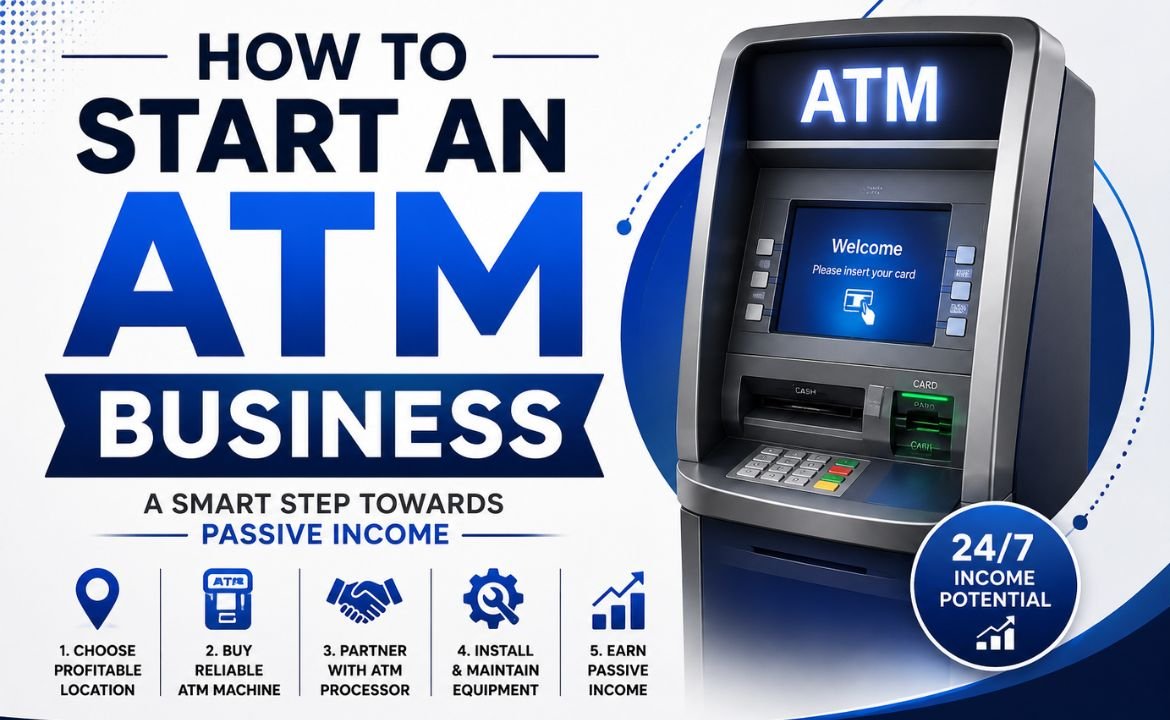
When you learn how to start an ATM business, you can start generating reliable passive income and at the same time provide services to businesses in your local communities. Every day, people use ATMs located in convenience stores, gas stations, restaurants, hotels, movie theaters, and other forms of entertainment to dispense cash and make quick purchases. Whenever somebody uses your ATM to withdraw money, a percentage of the ATM surcharge fees goes to you.
Of course, starting an ATM business goes far beyond just buying a machine and placing it at one convenient location. In reality, success depends on selecting profitable locations, adhering to regulations and compliance requirements, handling and replenishing cash flow effectively, and establishing useful relationships and alliances. We will look at every aspect from the very start in this complete guide about how to get a business that dispenses ATM fees off the ground.
Why an ATM Business Is a Smart Investment
Here are a few reasons that starting an ATM business can be superior to starting many traditional brick-and-mortar businesses: No Ongoing Daily Sales or Management. Once you have installed an ATM in a high-traffic, popular location, that machine can earn revenue for you without the need for daily sales, transactions, or product management. No Staff: You have no employee staff that needs to service each sale. ATMs can serve your customers 24/7.
Scalable: Most ATM business owners start with just a single machine.
The ATMs’ profit can be reinvested into purchasing additional machines to serve additional locations. The need for customers to be able to access quick cash continues to grow in restaurant/bar operations, convenience stores, laundromats, entertainment venues/events, and many retail operations where customers pay cash more readily than plastic.
How Does an ATM Business Make Money?
Surcharge fees to customers: When every purchase you make with your ATM is subject to a fee charged directly to you, those dollars can really add up. For instance, even if your ATM vendor doesn’t gouge you (a surcharge of $3.50 is a fairly high per-transaction fee), an ATM used hundreds of times a month generates passive recurring income solely from fees. Transaction sharing deals—Some business owners will actually pay an ATM operator for the benefit of having an ATM on site in their establishment as a draw for customers. Value added services-Some operators provide services like money services, business transactions, or other fee-based services through the ATM.
How to Start an ATM Business Step by Step
Understanding how to start an ATM business becomes much easier when you follow a structured process.
Create a Business Plan
First, you’ll want to identify what your business is all about. You should estimate the cost to start up as well as monthly operating costs, annual revenues, growth plans, and more. Writing down your plan will help you organize and is beneficial if your business needs a financing solution.
Register Your Business
Establish a business entity. LLC, Sole Proprietorship. Register the business with the local and state authorities. You’ll need to register your EIN number with them and meet any local permitting/license requirements that exist.
Keeping business finances separate also simplifies accounting and tax reporting.
Purchase Reliable ATM Machines
No two ATM machines were created equal. You have ATMs on the marketplace these days from dependable suppliers supplying… With EVM chip compatibility and contactless payments. ADA-compliant remote ATM management, automatic security upgrades, very easy upkeep. Buy ATM equipment today and skip out on downtime, client aggravation…
Find High-Traffic Locations
The location of a business has a big influence on profits. Consider sites where customers visit frequently, such as convenience stores. Gas station.
Grocery store.
Hotel. Restaurants. Nightclub. Shopping malls and plazas.
Cinemas etc.
A high-frequency location often generates far more sales than any obscure location.
Build Strong Business Relationships
References are responsible for a large number of successful ATM operator businesses. Excellent customer care, dependable machine maintenance and fast response to maintenance requests lay the foundation for relationships with placement providers. Reliable maintenance commonly results in additional placements.
Costs Maintenance, and Compliance
To have success launching an ATM business, there’s an upfront investment needed, though day-to-day operational costs are reasonable. Daily operational tasks generally include: • Purchasing machines • Installation • Insurance • Cashing machine • Processing fees • Internet service • Machine maintenance • Software upgrade and support Regularly cleaning up your ATM can also decrease downtime and maintain the lifespan of your investment. Ensuring machines are tidy and well-supplied with cash allows clients to have better experiences with your machines and reduces service disruptions.
Security and Compliance
Remember: Security first, always. The most current ATMs have embedded encryption, anti-skimming systems, the ability to link with surveillance equipment, and the ability to process safe financial transactions. In addition, business operators should be in compliance with state or financial regulations and ADA compliance and accessibility requirements, along with any governing payment networks. Using a competent ATM processor can remove the complexity of operating with any of those regulations.
Growing Your ATM Business
Once your first machine begins to make money, you might look to expansion. Many owners tend to add to the machine portfolio through cash reinvestment rather than through external loans. In addition, this practice would mean better diversification from operating business locations.
A wider spread among various types of companies such as convenience stores, hotels, and motels as well as restaurant and amusement outlets helps ensure the investment’s stability throughout the entire year.
With advancements in technology, there are new ATM models available featuring contactless payments, mobile wallet applications, cash recycling, remote diagnostic features, and real-time reporting. Many modern machine investment options may enhance the consumer’s overall experience and simultaneously help avoid costly repairs over the long haul. Top entrepreneurs usually examine transaction data periodically and make decisions concerning poorly performing machines as well as relocating their machines to a more suitable location. Similar to other investment opportunities, treat your ATM business in such a manner as to generate maximum long-term revenue.
Conclusion
Learning how to start an ATM business needs thoughtful planning—including wise location choice, robust machines, and routine maintenance. But although startup costs might range from minimal to substantial, the ATM business can become lucrative in the long run when handled correctly. As an entrepreneur, you’ll want to concentrate not on buying an ATM, but rather on partnering strategically with business owners, keeping ATMs accessible to consumers, and paying attention to how your cash machines perform over time. With these basic pointers and a savvy growth strategy, it’s possible to invest profits smartly and build the best ATM network for recurring income over the years to come.
FAQs
What should I be willing to spend on an ATM business to get started?
The initial startup will be based on how many machines and how nice the ATMs are you’ll want to get, as well as how many different areas you may place those machines in. Most will get one ATM first and then continue to get more as it makes a profit.
How profitable can it be to set up and operate an ATM?
Yes, with the placement of ATMs in appropriate, high-traffic locations, it can also make for passive income in the form of transaction fees.
How do I find ATM placement ideas?
Visit high-traffic sites where ATMs aren’t already in high supply. That way, you know you’ll get lots of business and cash.
Do I require a business license to have an ATM installed at my place?
Your location determines requirements. Register for a business license, secure necessary permits, and partner with a reliable ATM processor for guidance.
How to start an ATM business successfully?
Learning how to start an ATM business begins with choosing the right location to maximize transactions and long-term profits.








Leave a Reply